patrick-fore-b_SHPU5M3nk-unsplash

FAITH ENHANCER

The Bible talks about dead faith, which we can also refer to as empty faith, or useless faith.  It is that kind of faith that is as good as being non-existent because it is not accomplishing what God wants or desires of it.  “…. faith by itself, if it is not accompanied by action, is dead” (James 2:17).  Many of us have only this kind of faith, but God wants us to have faith that is fruitful.  Our faith is not accompanied by action because our faith is not complete.  There are some things that, when added to something else, make it better just like the condiments we add to hamburger.  Our faith is more like food without salt.  It is bland, tasteless and does not satisfy our desire and God’s purpose for us.  It stands to reason then that our faith lacks action or deeds or fruit because it is missing some vital ingredients or shall we say condiments or faith enhancer. 

Apostle Peter says there are certain things we need to add to our faith for our faith to be effective and productive. What are these faith enhancers? “For this very reason, make every effort to add to your faith goodness; and to goodness, knowledge; and to knowledge, self-control; and to self-control, perseverance; and to perseverance, godliness; and to godliness, mutual affection; and to mutual affection, love.” – 2 Peter 1:5-7.  Our faith does not seem to be able to achieve much on its own. In fact, James said that faith without deed is useless (James 2:20).  The question is, what deeds can we accomplish without these faith enhancers?

So that we do not get things twisted, we need to restate that faith is key; faith is the foundation we must build on.  All these faith enhancers will also not get us anywhere without faith.  All the faith enhancers listed by Apostle Peter are not available apart from faith. So, we must remember that apart from faith there is no goodness, knowledge, self-control, perseverance, godliness, mutual affection, and love. However, our faith is lame without the faith enhancers.  Take for example our desire to love our neighbors or help the poor.  Our faith by itself is worthless in this instance without goodness, mutual affection, and love.  The faith enhancers help us to accompany our faith with deeds.

One thing to also keep in mind is that unlike food enhancers, you can never over enhance your faith.  Too much salt for example will mess up the taste of the food.  But the more our faith is enhanced by godly virtue the more productive it becomes.  Apostle Peter said, “For if you possess these qualities in increasing measure, they will keep you from being ineffective and unproductive in your knowledge of our Lord Jesus Christ”- 2 Peter 1:8.  My brothers and sisters, we must have faith, even if it is the size of a mustard seed, but we must put our faith to work by adding godly virtues in increasing measure. As we grow in godly virtue so also our faith becomes more productive.  According to Dr. David Jeremiah in his book “Everything You Need”, God has given us, the faithful, everything we need for our life’s journey.  What He gave us are our faith enhancers, we must aspire to have them in increasing measures because along with our faith, our journey of life becomes a lot easier.  May His grace abound for us always and may we continually grow in godly virtue in Jesus’ name.

pressed

PRESSED BUT NOT CRUSHED

While we have been hemmed in on all sides with all sorts of undesirable news in recent times, I am never in doubt that we remain more than conquerors through Christ who loves us. “We are hard pressed on every side, but not crushed; perplexed, but not in despair; persecuted, but not abandoned; struck down, but not destroyed” (2 Corinthians 4:8-9).  Not only do we all now know someone who has succumbed to the overwhelming effect of the Covid-19 disease, we have been personally touched and affected by its most devastating effect, death. It is hard these days to go through a day without learning about someone whose life is lost to this disease. The reality of the effect of this disease weighs heavily on many of us.  Yet we wake up daily, pick up our mantle and move on.  Surviving and functioning in these climes is not by anyone’s power but only by the grace of God.

If one would be very honest, it is difficult to hear about an illness in this season and not think about death.  We think about the rate at which folks are being separated from their loved ones and the fear of death grips our souls.  Yet, for us Christians, death is meant to be our liberator from this world of sin and, as Apostle Paul puts it, death is not capable of separating us from the love of Christ.  As we ponder on these things, we realize that men of old have gone through even worse sufferings and they continued to be held up by their faith.  Apostle Paul talks about what he called “the sufferings of this present time” (Romans 8:18 – NKJV) and in the face of the suffering declares that he anticipates a greater glory.  We are obviously going through a lot now either by getting struck with the disease or taking care of those had been struck or by grieving those who have succumbed to its most devastating effect.  Friends have passed, siblings have passed, parents have passed, and some have even lost their children.  How are we responding to this threat on our peaceful existence?  How do we respond to this thing that seems to make our lives as unbearable as it can possibly make it?

We must learn from the experience of our foremost Apostle, Paul.  In the face of all the tribulations he faced, he declared in Romans 8:37 that “Yet in all these things we are more than conquerors through Him who loved us.” We conquer after we have fought a battle.  So, when Apostle Paul talks here about being conquerors because of the help we get from our Lord Jesus, the lover of our souls, he was saying that to overcome we must fight as in a battle.  It is a battle for our souls and a battle for our ways of life.  The battle shall be won but we must, like those who go to battle, be ready to fight.  We cannot deny that the impact of the virus, and its attendant restrictions on the way we live our lives, places us under tremendous stress. The effect they have on us and our loved ones seems to be waging a frontal attack on our faith and our health, body, mind, and soul.  This is an invasion of Satan and his foot soldiers.  Our only recourse is to rise up and fight, because in all these trials we are more than conquerors. 

Paul’s words here are both encouraging and challenging.  They are encouraging because they remind us that God has indeed given us all we need to live our lives, including in times of trials and tribulations like these.  They remind us that all we need to do is keep trusting in the Lord and He shall see us through.  Remember, His Word said that “No temptation has overtaken you except what is common to mankind. And God is faithful; he will not let you be tempted beyond what you can bear. But when you are tempted, he will also provide a way out so that you can endure it” (1 Corinthians 10:13). His Word tells us He has already made us overcomers.  We are already conquerors. Paul’s words should also challenge us as Christians to take the battle to our adversary, Satan.  His words should cause us to rise up as warriors that are ready for battle.  As Christians our main weapon is prayers.  It is time for us to rise up in prayers.  We must not set ourselves up as “sheep to be slaughtered.”  We must pray and not faint.

We should also use this period of adversities as a time to learn.  Apostle Paul told us that “We rejoice in our sufferings, knowing that suffering produces endurance, and endurance produces character, and character produces hope, and hope does not put us to shame” (Rom. 5:3-5).  We shall overcome, no doubt, but we must be prayerful so that when we finally go through, we would not only have overcome but we would have been transformed by His power and grace.  We must not waste our trials.

OUR LENT BE-ATTITUDE

OUR LENT BE-ATTITUDE

The Christian calendar of Lent has come upon us again.  It is meant to be a time of abstinence, penitence, repentance, renewal, and rededication.  It is a time to approach the throne of grace just exactly the way we are and seek mercy and grace from our God most high.  We must make this season more meaningful by allowing its importance to weigh on our hearts so we can focus more on the real essence of the season. Lent is a great time to “repent” – to return to God and re-focus our lives to be more in line with His purpose for us. It is a 40-day trial run in changing our lifestyle and letting God change our heart. We do it yearly so we can perfect our walk with God.

The whole idea of Lent is influenced more by the 40-day fast that we often engage in during this period.  Our attitude during this period then must be based on biblical word on fasting.  We get a glimpse of what fasting should be about in Joel 2:12-17.  “Even now declares the Lord, return to me with all your heart, with fasting and weeping and mourning” (vs 12).  This indicates that whenever we are fasting, we must approach the throne of grace with penitence – a feeling of remorse or deep sadness for things we have done wrong.  The penitent attitude is not about feeling ashamed or discouraged about things we have done, but rather to point us towards a life of resolve, a resolve to change our ways and live a life of personal accountability to God, to God’s people, and to oneself.  Being penitent is an indication that we have been awaken from our previous position of slumber, of ignorance, of disobedience, and recognition that we had hitherto been on a path that is at odds with God’s purpose for our lives. Once we recognize this, it makes it easy for us to repent and resolve to live a more purposeful life.  So, we see that abstinence at this period is not an end by itself, but it is a means for us to move toward penitence and repentance.  Our first set of Be-attitudes at Lent are thus: Abstinence, Penitence, and Repentance.

As we embark on this journey towards repentance, the first thing we must do is to keep our eyes fixed on God.  “Now, therefore,” says the Lord, ‘Turn to Me with all your heart’” (Joel 2:12).  We must turn from self and turn to God.  Let us make this period about God and our relationship with Him.  This season must not be just about tradition, it must be a period of intense focus on God.  Study His word, seek His face, prioritize the time spent with God daily, and be sure to live according to the tenets of our faith. While pursuing repentance we must also strive to stay away from sins.  This is not the time for us to be caught in the cords of our own sin. Remember we are looking unto God for grace and mercy, but we cannot continue to sin and expect grace to abound (Romans 6:2).

In addition to focusing on God, this season, we must let our change be from within.  Joel 2:13a says “Rend your heart and not your garments. Return to the Lord your God.”  Let us resolve to be honest with our maker.  The song we often sing, “Just as I am without one plea”, presupposes that we are completely open with God.  We must be honest with God not because He does not know, but because our honesty is a pointer to our true penitence. God already knows our heart, but it is necessary for us to acknowledge, for our own sake, where we have gone wrong.  We must eschew every form of hypocrisy in the presence of the Lord.  This season is not about making a show of our faith, or calling attention to how righteous we are, or just about going through the motion. Going through the motion only fools us, it does not fool God.

In this season we must have a positive attitude.  As we approach the throne of grace, trust God that He is able.  It does not matter what you have done or where you have been in the past.  The word of God says, ““Come now, let us settle the matter,” says the Lord. “Though your sins are like scarlet, they shall be as white as snow; though they are red as crimson, they shall be like wool”” (Isaiah 1:18).  There is no issue that God cannot settle.  The toughest ones are our sins, and God says if they are red like scarlet, He can make them as white as snow.  Our God is able.

Finally, brethren, always be in an attitude of prayer.  We must use Lent as a time of intentional prayer. Pray fervently, because prayer helps convey our remorse to God while strengthening our relationship with Him.  As we pray for ourselves, let us also intercede in prayer on behalf of other brethren.  Let us resolve to change and to make a change.  Let us resolve to be impactful wherever we are to change our world.  When we do all these, our fasting becomes meaningful and our God is glorified.

VALENTINE LOVE

VALENTINE LOVE

I have experienced different forms of Valentine celebrations in my lifetime.  In my High School days, we will come to class sometimes before the day, all of us looking forward to our usual Valentine Day tradition.  The tradition then was to pick ballot papers that reveal who your Valentine that year would be.  Many of us who did not have the courage then to talk to ladies always hoped and prayed that the master orchestrator will orchestrate the ballot to favor you such that the one you have been secretly admiring will turn out to be your Valentine.  It usually never worked out.  As we grew up, the tradition changed to parties on Valentine Day.  Usually, the guys plan the parties and invite the girls.  Now it is about making the wife the happiest on Valentine Day.  Different seasons, different expressions of Valentine love.  Same love, different modes of expression.  Along with the day also comes different forms of expectations.  Roses, chocolates, sweet messages of love, dinner out, etc.   When we cannot express love that genuinely fulfills the expectations, we act them, or we lie our way through them.  We have created a vision of an ideal love celebration.  Many times, the hopes do not always match the reality.  The day comes and goes like any other day, the celebration either ignored, avoided or faked.

While we often say that love is not a feeling, the truth is that love does make us feel good.  So many of the actions of love that are shown on a day like Valentine Day often engender a good feeling.  The danger here is that we go to great lengths to make people feel good because that is the only feedback that matters to us.  You find that Valentine love is many times tailored to get the good feeling.  So, while our intention is to show love at Valentine or celebrate love at Valentine, let me just say, many times, and I say many times, Valentine just offers the opportunity to go through the motion, a motion devoid of action.  I came across a new Nigerian fad on social media and it did not immediately occur to me what they were trying to get across so I had to investigate it.  It turns out the new fad had its origin from an old Preacher who was trying to warn people about the effect of fake love at Valentine.  The man will say things like, “I love you” then he will end it by saying “lori iro”.  “Lori iro” means “on top of lie” or “it is a lie”.  So, it goes like, “I love you” “lori iro”; “you are my chocolate” “lori iro; “you are beautiful” “lori iro”; and so on.  It was funny, but it is very true.  Valentine love expressed these days is often not the real love; it is not genuine love.  It is love just tailored to get you to believe a lie.  As children of God, we should not be part of these types of lies being passed as love.

In 1 John 4:7-8 the Bible talks about love in the most apt manner.  “Beloved, let us love one another, because love comes from God. Everyone who loves has been born of God and knows God. Whoever does not love does not know God, because God is love.”  How do we as children of God begin to understand this truth?  1 Corinthians 13: 4-7 lists all the attributes of love.  “Love is patient, love is kind. It does not envy, it does not boast, it is not proud.  It does not dishonor others, it is not self-seeking, it is not easily angered, it keeps no record of wrongs. Love does not delight in evil but rejoices with the truth.  It always protects, always trusts, always hopes, always perseveres.   Wow!  So, before we begin to say that common phrase, “I love you”, we really need to check if we mean all of the attributes mentioned above, because it is only when we mean this that we can really say that we love. When we say it just so that we can get someone to feel good, then it is a “lori iro” kind of love.  That is not the kind of love we are called to share.

My brothers and sisters, on this Valentine Day, a day we celebrate love, I just want you to remember that we love because our God first loved us.  I want you to also remember the attributes of that love as detailed in 1 Corinthians 13:4-7.  I want you to remember that God Himself is love, and His love is very different from the kind of love many of us profess.  God’s love is unconditional, and it’s not based on feelings or emotions. God’s love does not deceive.  God’s love is genuine.  God does not love us because we are lovable or because we make Him feel good.  God loves us because He is love and He created us to have a loving relationship with Him.  When we went astray, He sacrificed His Son to restore that relationship.  The least we can do is to love Him in return.  When we love God, it becomes easier to love ourselves too and that love, that is based on God’s love, endures, and it is genuine.  This is the love we are called to express always.  Show some real love to your loved ones today people of God.  Happy Valentine’s Day and may you always be able to express godly, genuine love, in Jesus’ name.

ben-white-4K2lIP0zc_k-unsplash-Recovered

THE INTER-CONNECTEDNESS OF OUR STORIES

Judge Frank Caprio is a Municipal Court Judge in Rhode Island who has become a viral video star for his unique type of judgments.  For a while now, I have enjoyed watching some episodes of his court trials.  The unique aspect of his hearings, to me, is the attention he pays to the individual stories of the people brought before him.  In the end when he gives his judgement, they are often more influenced by the stories he heard than the facts of the case.  In one case he fined a woman $50 only to find out it will leave the woman with only $5 in her pocket.  He changed his judgment and dismissed the case. In an interview with the Associated Press, Judge Caprio said he thinks he should take into consideration the uniqueness of their stories.  Did they just lose someone? Is someone sick and in the hospital? Do they have kids that are starving? And so on, which are all part of real-life situations.  Asked what he thinks about his judgements going viral, he said it was because people are accustomed to the institutions of government coming hard on them without regards to any personal situations.  This is to say, even when people have done something against the law, their stories still matter in the way judgments are given against them.  This is another way of saying we must temper justice with mercy.  Everyone has a story to tell. The stories we tell help to bring into focus where we are coming from and where we are in our journey of life.  It is important for us to tell these stories and it is important for us to listen to other people’s stories.

God has called us to love other people the same way we love ourselves.  If loving myself requires that I know myself and understand myself, then it goes to say that I must also know my story.  If I do not know my story, then I cannot say that I fully know or understand myself.  In a similar manner, it is important to know the one we seek to love.  That love journey begins by knowing the story of the object of our love.  God has called us to show love to others, particularly the downtrodden, the poor, and the oppressed.  It requires that we know their stories.  It does not matter how bad we think someone may have been, God does not intend for us to disregard them and their stories.  We must listen to their stories so that we can see the opportunities God is bringing to our attention.  While these stories are important in helping us to see the work of God in others, interestingly it also helps us to see how connected we are.  If we do not recognize how our stories are connected, we will be discounting the God that is in each of us.  To attempt to live solely unto ourselves conflicts with God’s design for us to be in relationship with our fellow human beings. God created us to be together and wants us to maintain our connections with one another. Through our stories, our humanity is bound together with God.

Remember the story of the rich man and Lazarus that Jesus Christ told to His disciples in Luke 16:19-31.  The rich man lived in luxury, wearing fine linen while obviously looking at the beggar with such disdain even as the beggar longed to eat whatever fell from the rich man’s table.  It is safe to say that the rich man did not care about Lazarus’ story and obviously did not realize the interconnectedness of their unfolding stories. With all the wealth and power and opportunity he had to do some good, he chose to focus solely on himself and his life of luxury.  As the story goes, they both died and the rich man found himself in hell, only to look up and realize that Lazarus was by Abraham’s side on other side.  Still looking at Lazarus with disdain, he asked Abraham to ask Lazarus to dip his hand in water and touch his tongue.   When that was turned down, he wanted Lazarus to go to his family to warn them. He was reminded of how good it was for him and how bad it was for Lazarus in their lifetime. They had interconnecting stories, but the rich man did not recognize it.  This became an albatross for him.  His problem was not about his riches but that he refused to see and help someone who was hurting and who God placed in his path. He refused to hear Lazarus’ story and as such could not be a blessing to him.

Brothers and sisters, we ignore our interconnectedness to our own peril.  God has a purpose for each of us and everyone He brings across our ways are meant to be part of our stories and part of His plans for us. Judge Caprio recognizes this, and it influences his judgments. When we ignore our connectedness and view someone else as inferior, as the rich man did, we are invariably ignoring God, the author of those connections.  When we fail to realize our need for our interconnections, we become more selfish and resentful. When we refuse to help others who are hurting, or even just find out their stories, we change the trajectory of our own stories for the worse. People of God, it is crucial to our well-being that we become aware of the connectedness of our stories and how important it is for loving our neighbors like ourselves.

LOVING ONESELF

LOVING ONESELF

We have been discussing the reality that some Christians find it difficult to love their neighbors because they do not understand the concept of love enough for them to love themselves.  We generally have this false concept of self-love which results in activities of self-indulgence that lead folks to “over-loving” themselves to the point of neglecting the needs of others close to them.  We “love” ourselves so much and do not love others nearly enough.  Our warped idea of self-love is the root of the greed we see in society and the determination to win by all means necessary.  If we must face facts and look deeper into the idea of love, we find that most of us do not love ourselves enough and because of this lack of love for ourselves we end up hurting others rather than loving them the way God wants us to. 

When we think about love in general, many of us think about something that makes us feel mushy or sentimental.  We think in terms of the “eros” kind of love that makes people desire to be desired based on some momentary attraction.  We tend to think love is about a feeling, but many times we have learnt from the word of God that “love acts” (1 Corinthians 13). The love we reference when we talk about self-love or loving our neighbors the same way we love ourselves is neither a feeling nor an emotion.  True love cannot be measured by how good we feel but by its capacity for faithfulness and how well it expresses itself for the good of the recipient.  On the other hand, true love is about the recognition that all creation is good and our creator, God, has created all of us as part of His grand plan for the good of His creation. 

To define true love, otherwise known as Agape love, I will say it is the determination to know our roles within God’s grand plan, and to do our possible best to enhance our life or that of someone else for the purpose of fulfilling that role.  It is about faith, it is about commitment, and it is about action. It is also about giving; it is about caring; it is about extending a hand of fellowship for your own betterment, for the betterment of your neighbor, and for the glory of God.  To love oneself, therefore, we must strive to know what our roles are within God’s plan and then we must make the efforts to do our best in preparing our hearts, our souls, and our bodies to diligently fulfill that role, giving all it takes as we are able.  Self-love is having the confidence that I am who God says I am and working as hard as possible, with God’s grace, to live and walk in it. “For we are his workmanship, created in Christ Jesus unto good works, which God hath before ordained that we should walk in them” (Ephesians 2:10 KJV).  As we do this, we must also do it with heart, soul, and body. All these parts of our being must be ready and willing for us to love fully.  This is in line with the word of God that says, “And thou shalt love the Lord thy God with all thine heart, and with all thy soul, and with all thy might” (Deuteronomy 6:5 KJV). 

The importance of self-love cannot be overstated.  The word of God says, “And the second is like unto it, Thou shalt love thy neighbour as thyself” (Matthew 22:39 KJV).  This is saying we must treat others the same way we will treat ourselves.  If I am the type who does not see any good in myself, it will be hard for me to see any good in others.  If I do not know or understand God’s purpose for me, it will be a stretch for me to know or understand God’s purpose for other people.  If I do not know or understand what to do to improve myself or to be in line with God’s will for me, it is far-fetched to think that I will know what others should do to improve themselves so they can be in line with God’s will for them.  If I am the type who will always take actions that are destructive for my life, what kind of love would I be able to show to other people?

As mentioned before, what we often engage in, which can be considered as self-indulgence or debauchery, is not self-love.  The feeling of ‘I am better than my neighbor’ is not self-love; the need for attention that indicates a level of self-importance is not love.  Overpampering of oneself just because we can, is not self-love. To be clear, the idea here is not to say that you should not pamper yourself, but that this action should not be mistaken as self-love.  Loving myself is to know myself, understand myself, care for myself body soul and mind, and work as hard as possible to be an agent of growth for myself so I can fulfill the calling of my faith.  We must also let the word of God in 1 Corinthians 13 be part of our guide when it comes to loving oneself.  Be patient with yourself, be kind to yourself, do not dishonor yourself, do not be easily angered with yourself, do not keep records of your own wrong doing, always seek the truth, and be sure to protect yourself, be hopeful, and persevere.  That is what is means to love yourself.  Now, can you find it in your heart to do that for your neighbors too?

THE ESSENTIALITY OF LOVE

THE ESSENTIALITY OF LOVE

It is interesting to note how people often engage in the right thing but for the wrong reason. It happens all around all the time.  Two biblical examples come to mind.  First was from Paul’s letter to the Philippians in Philippians 1:15-17: “It is true that some preach Christ out of envy and rivalry, but others out of goodwill. The latter do so out of love, knowing that I am put here for the defense of the gospel. The former preach Christ out of selfish ambition, not sincerely, supposing that they can stir up trouble for me while I am in chains.” Interesting how Paul says here that those who preach the gospel out of goodwill also do it out of love, while the others do it for the wrong reason.  This is a pointer to the essentiality of love.  It is important that our actions be accompanied with love for them to be meaningful.  The second example where Apostle Paul was very explicit with this message is in 1 Corinthians 13:1-3. The message started from 1 Corinthians 12 where he was talking about spiritual gifts. 

Many in Corinth were misusing the gifts and many others had a different understanding of what the gifts were about, so they not only clamored for the gifts they believed were more important than others, they also used the gifts to oppress others. They used their spiritual gifts as weapons to fight and denigrate with, rather than tools to build with. So, Paul needed to teach them about the place of their gifts in the scheme of things.  In 1 Corinthians 12:31 he said, “Now eagerly desire the greater gifts. And yet I will show you the most excellent way.”  Meaning it is okay to desire the supposedly greater gifts, but there is a much better way.  The reason the Corinthians were clamoring for the greater gifts were for the wrong reasons; Paul wanted to show them the right reasons and he did this in 1 Corinthians 13.  

The right reason, according to Paul, is based on the essentiality of love.  To show how important love is, Paul describes the ministry of some of the more sought-after gifts without love.  This was because the problem in Corinth was not a lack of zeal, a lack of truth, a lack of volunteers, or a lack of giving; it is caused by an absence of love for people who are different from them, especially the difference between the rich and the poor. Whenever love is absent from a group or relationship what you have is an empty shell, lots of noise but no substance. This may be our marriages, our families, or our churches.  For the church, you can on the surface, have an appearance of health, growth, and success but be empty and weak if there is no love.  Paul said, “If I speak in the tongues of men or of angels, but do not have love, I am only a resounding gong or a clanging cymbal.  If I have the gift of prophecy and can fathom all mysteries and all knowledge, and if I have a faith that can move mountains, but do not have love, I am nothing. If I give all I possess to the poor and give over my body to hardship that I may boast, but do not have love, I gain nothing” – 1 Corinthians 13:1-3.  Our services can be super electrified – otherwise known as “spiritual experiences”, great preaching, mountain-moving faith, even sacrificial giving.  Paul says when we do all these things without love, it amounts to nothing.  Someone can speak in every conceivable tongue, even that of angels, but without love, they also amount to nothing.

People of God, someone can preach great sermons, share the deepest understanding, and even demonstrate faith in impossible circumstances. Without love, Apostle Paul says, it is all worthless. Church or ministry members can give away everything they have; they can serve the poor and bless the orphans; they can even go as far as dying for Jesus; without love, all of these are worthless. We gain nothing if the motive for whatever sacrifice we give is pride or self-display. We are nothing without love.  Our Churches, without regards to how big, popular, or gifted, are nothing without love.  No matter how right we think we are in our attitudes, if we don’t have love, we are wrong. Love is priority one.  Love comes before all and love survives all. 

We Christians very often flaunt our ability to speak truth, but all truths that are devoid of love are nothing. Many times, we have heard people say they like to “call a spade a spade”.  In truth a spade will always be a spade, but we achieve nothing when we call a spade a spade when we do not pronounce it in love.  Our attitude matters.  How the spade is called a spade matters. Every intention of ours becomes balderdash if they are not accompanied with love.  In how we talk in our relationships, in our workplaces, and in our churches, love is essential.  In every facet of our lives, love is important.  Let us learn to love.  This is the time. Tomorrow may be too late.

Neighborhood

WHO IS MY NEIGHBOR?

“And who is my neighbor?”  That was the question posed to our Lord Jesus Christ by an expert in the law.  His intention was to test the Lord.  We all know the answer the Lord gave him, the story of the good Samaritan (Luke 10: 30-37).  It was not a simple answer, but it is an answer that should cause us to think. It is an answer that should cause us to think about who we have made our neighbor.

The Lord’s command for us is to love our neighbors the same way we love ourselves.  It is therefore important for us to know who this neighbor is.  Many people have come to believe that their neighbors are the folks living next door.  Some others think only the Church members are their neighbors.  When we read Jesus’ answer, we find that our neighbors are way more than the folks next door or the brothers and sisters at Church.  The lawyer’s question “And who is my neighbor?” seems like a tongue-in-cheek way of belittling the idea of loving our neighbors.  It sounded almost like, is that all I needed to do?  However, our Lord’s answer, full of divine wisdom, rather than narrow the reach of those we need to love, does expand it. His answer showed that our neighbor does not have to be from the same tribe as us; our neighbor does not necessarily attend the same church we attend; and, our neighbor may not even share the same faith that we share.

While growing up, there was a song we used to sing which, translated, says “To whomever you have the ability to be of assistance, that person is your neighbor”.  This means that the neighbor we should love is not limited by our proximity or relationship.  Our Lord Jesus Christ was teaching us with that parable that loving a neighbor is much more than just showing compassion to the needy, which is part of it, but that who we do it to also matters.  In the Samaritan story, the one that showed love to his neighbor was the Samaritan.  The one at the receiving end of the love was a Jew.  In those days the Judeans did not think of the Samaritans as good people. They were a set of people that the Judeans looked upon with scorn.  They even considered them as foreigners. So, the example our Lord Jesus chose here uses the one that is despised and hated as an example of a neighbor and shows that kin or faith is not a delineator of good neighborliness. 

In the last Sunday sermon given by Rev. Dr. Martin Luther King jr., in 1968, he alluded to how technology has changed the whole world and has turned the world into a neighborhood.  The world has even become more of a neighborhood today than it was in 1968.  Rev. King lamented in that sermon that as much as the world has become a neighborhood, those who live in it have not been able to make it a brotherhood.  This was referring to the fact that the world had become more of a physical neighborhood where we were not able to love the neighbors in the neighborhood the same way we loved ourselves.  We tend to give different kinds of reasons why we do not follow the Lord’s command about our neighbor, much like the Priest and the Levite in the story of the good Samaritan.  Rev. King in another of his last messages, talked about the reality of the Jericho road. He said “It’s a winding, meandering road. It’s really conducive for ambushing”.  He talked about the possibility that the Priest and the Levite may have been deterred because they wondered if the robbers were still around; or the possibility that the man may have been faking and was just acting like he had been robbed and hurt so as to lure them there for quick and easy seizure.  Rev. King concluded that the question in the mind of the priest and the Levite may have been – “”If I stop to help this man, what will happen to me?” But then the Good Samaritan came by. And he reversed the question: “If I do not stop to help this man, what will happen to him?”’”

Let it be clear to us that there will be stumbling blocks along the way when we try to extend God’s love to our neighbors.  That road will sometimes be a winding and meandering road that is conducive for ambushing.  Sometimes your love will not be returned and many times it will be outrightly rejected.  The subjects of our love may not be cooperative, and quite often extending love to that neighbor may be at some cost to us. If me must be good neighbors, we must not allow the dangers of our Jericho road to deter us.  Always think, if I do not help this neighbor, what will happen to him?  May God give us the grace to be the good neighbor.

INCLUSIVE LOVE

INCLUSIVE LOVE

If we must understand God’s injunction to us about loving each other, then we must understand the various kinds of love that are out there and understand what love we must express to each other and our neighbors.  The word love is so overused in the society that it may have watered down its importance.  It is so easy to hear people just mouth the word at every instance, without thinking about the implications.  It turns out that the concept of love is very important for us Christians.  Equally important is the type of love we profess.  God expects us to exhibit Godly love but many times we mistake the other kinds of love for Godly love.  The highest levels of love mentioned in the Bible are phileo (brotherly) love and agape (selfless) love and both of these are important for the body of Christ.

The word love itself is an ambiguous word that can describe or be motivated by different kinds of feelings.  We can express love for each other because we are motivated by some pecuniary or emotional gains from the relationship.  This kind of love is selfish love.  There are many situations in life where we express selfish love. There are many friendships where the love expressed is based on the mutual gain that is inured to them. It is a tit for tat kind of love.  I love you and you love me back. In these mutual benefits kinds of love, the recipient of the love is seen as a means to an end.  The moment the expected end of the love is no longer there the love dissipates and ends abruptly.  So, the object of love in this situation is just a tool that is meant to be used. The humanity in the recipient has been removed and the person has been depersonalized.  This kind of love is not the love that Christians are encouraged to show.

Another thing that motivates us to love is romantic emotion.  We call this kind of love romantic love.  The romantic love is a little higher than the mutual benefit love in the sense that it can be altruistic in its most beautiful form.  At the highest level of romantic love, a person who loves can die for the object of his love. People will often go to great lengths to satisfy the object of that love.  Romantic love however still has a tinge of selfishness in it. We love romantically because there is something in the recipient of our love that attracts us.  It may be the beauty, the intelligence, the way the person speaks, or whatever.  The bottom line is that there is something that motivates us to extend our love to such a person.  The romantic love is also meant to be reciprocal.  Therefore, a lot of times people can easily fall out of romantic love because the attractiveness is no longer there, or the love is not returned.  We are called to express romantic love to our spouses, but it is obviously not the love we are called to express to our neighbors.

The brotherly love is a higher-level love not because it is less selfish than romantic or mutual benefit love, but because it can be more inclusive.  The romantic love is limited to two people who are attracted to each other, while the mutual benefit love is about two people whose love is motivated by what they can gain from each other.  On the other hand, the brotherly love is wider in scope and can be expressed with many people at the same time.  It is however still a selfish kind of love because it is usually motivated by friendship with those we profess to love.  This is the kind of love that we often profess to each other in our local churches.  So, I can be in a church and call all the men my brothers and all the women my sisters.  “By this everyone will know that you are my disciples, if you love one another” (John 13:35).  This is brotherly love. The drawback, however, is that the moment someone does something against us, we tend to withdraw the brotherly love.  While this kind of love is good for us in our local churches, the fact that it can be motivated by how we feel towards the brother or sister makes it less than the ideal love God wants us to have towards each other.

The highest level of love we can profess is the selfless, sacrificial, and unconditional love.  This is what we usually refer to as the Godly love.  It is like the love that God has towards us which is much deeper than we can imagine. This love is expressed to someone even when there is no expectation of a reciprocal response.  This love is expressed without motivation.  This love is expressed without exception.  It is an all-inclusive kind of love.  It is love that must be expressed to both friends and enemies alike.  “But to you who are listening I say: Love your enemies, do good to those who hate you” (Luke 6:27).  This love is the love of God operating in the human heart.  This is the love we as Christians are called to profess.  If we fail to love our enemies there is no way for us to fit into this category of Christian love. When we love as Christians our love must be inclusive.  We need the help of God to do this right.  When we do it right, we should be able to profess romantic love to our spouse, brotherly love to our friends and neighbors and selfless, sacrificial, unmotivated love to all.

GREATER LOVE

GREATER LOVE

Welcome to the year 2021.  Let us make this year all about “Greater Love”.  Last year we were all looking for perfection in our circumstances, the sovereign Lord changed it to perfection in our relationship with Him. What happened in 2020 is the kind of stuff that moves people to seek God.  I trust that many who have genuinely sought God in this past year had found Him.  My prayer is that every relationship with God, no matter how shaky it is now, will be perfected by God’s grace in Jesus’ name.  Trials strengthen our faith, no doubt.  Mine has been strengthened in the past year, I pray yours have been too.  The struggle continues, but the Lord is still on His throne and His word tells us “without faith it is impossible to please him: for he that cometh to God must believe that he is, and that he is a rewarder of them that diligently seek him” – Hebrews 11:6 (KJV).  He will take care of us; our role is to press on and do what He is calling us to do.  I am personally excited about where the Lord is taking us this year.  We need to move beyond our corner and extend our hands of fellowship and love to others.

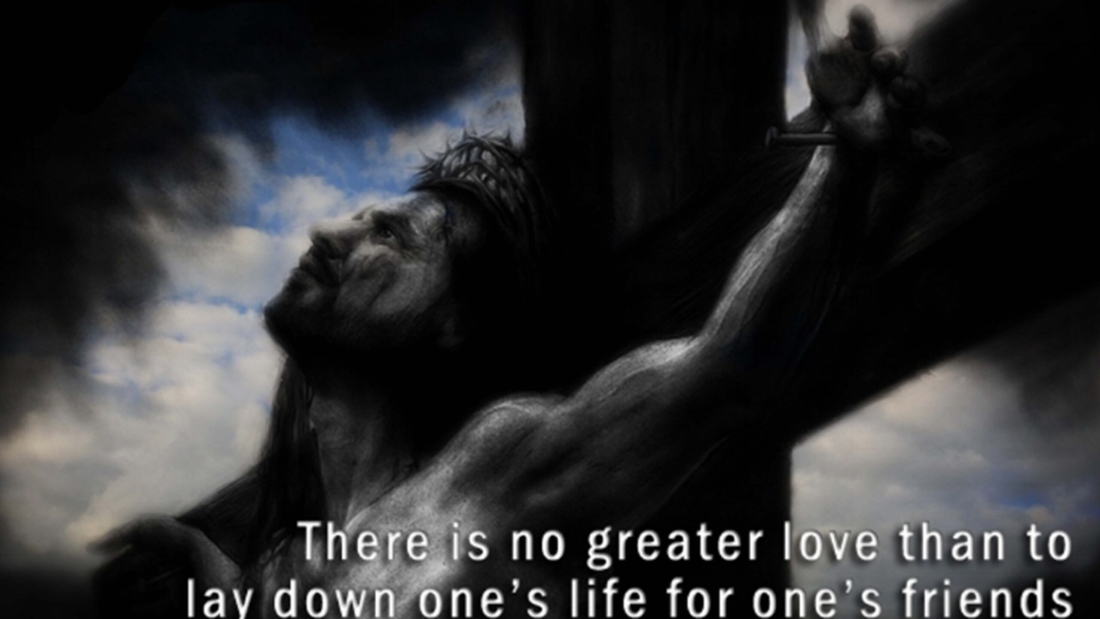
One of the basics of Christianity taught by our Lord Jesus Christ is love.  A Pharisee had asked Him in Matthew 22:36 (NIV), “Teacher, which is the greatest commandment in the Law?” His answer in Matthew 22:37-39 (NIV) was “‘Love the Lord your God with all your heart and with all your soul and with all your mind.’ This is the first and greatest commandment. And the second is like it: ‘Love your neighbor as yourself.’”  The question here was about the greatest commandment, and the Lord just pointed out to everyone listening that, it is all about love. Love for God and love for others.  Then in John 15:13, our Lord added another caveat, Greater Love.  “Greater love hath no man than this, that a man lay down his life for his friends.” – John 15:13 (KJV).  This verse suggests the idea of how much we love.  It tells us that some acts of love are greater than others.  So, there is the possibility that we believe that we love but may not be loving enough.  What yardstick do we use in measuring our love for God and for others?

I read about the story of a little boy who was so enamored with growing that he made his own special ruler with which he measured himself daily.  From his point of view and based on his measuring ruler, he believed he was getting bigger.  One day his father watched him doing his thing and asked him what was he doing? He responded that he was measuring himself so he can watch himself grow. His father looked at his measuring ruler, left and returned with a with a yardstick. He told his son to stand beside the yardstick and to the boy’s greatest disappointment, he discovered he had not grown much from what the doctor had told him a year before.  It revealed a big problem for the boy, he had been measuring himself with wrong yardstick. 

Brothers and sisters, we have the same problem.  One little act of love and we pat ourselves on the back and believe we have arrived.  Our Lord Jesus Christ has established a proper yardstick with which we can measure our love growth.  “Greater love hath no man than this, that a man lay down his life for his friends.”  The idea of laying down our lives for our friends speaks to self-sacrifice. Are we willing to give up our sense of self, our sense of security, and our sense of self-sufficiency to engage in the life of another?  That is greater love. This is our ultimate goal as Christians; this is our perfect love.  Our challenge is to respond to the command of our Lord Jesus Christ to exhibit that greater love. We are called to a Greater Love and it is time for us in this new year to begin to make that move towards that greater love.  We must begin to move from our “no love” situation into a life filled with selfless love.  Let us move from our resting place of little love and move towards our calling of greater love.  We have not been called to love our family alone, we have not been called to love our friends alone, and we have not been called to love God alone.  Our calling is to love our enemies and bless them that curse us. Also, the Bible teaches us that “If a man say, I love God, and hateth his brother, he is a liar: for he that loveth not his brother whom he hath seen, how can he love God whom he hath not seen?” – 1 John 4:20 (KJV). Those of us whose lives have been transformed through being born again must have a new attitude toward other children of God. Having experienced Christ’s sacrifice first hand, we must be ready to live our lives sacrificially.

Are you ready this year to show greater love?  Start from your corner, but do not stay too long there.  Let us embark on this journey together.  I am called, you are called, we are all called to this noble idea.  Make up your minds today to live a life of greater love and you, surely, will never regret it.  Be blessed!